






Environmental Stewardship
|
 |
Livestock Watering Systems
Bird and Wildlife Habitat
|
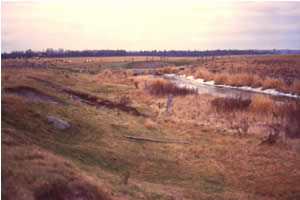 Originally, cattle had full access to the creek. Water quality was poor, and there was little bird and wildlife habitat. (1983) |
|||
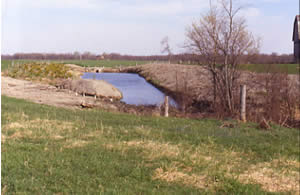 The new reservoir (1986) |
To solve this problem, the cattle were fenced out of the creek completely, and a reservoir was dug. The cattle still need a source of drinking water, so an innovative trough system was introduced to give them access to water, while restricting their access to the waterway.
|
|||
|
|
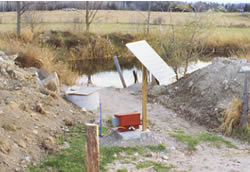
Innovative watering system. Now cattle have clean drinking water year round, and they can access this water without setting foot in the pond. The reservoir's waters flow through a trough, which the cattle can access by a concrete walkway. No more dirty water, the cattle are now much healthier, and the habitat around the waterway has had a chance to grow back. Note how the fence is a good ten feet from the water's edge. |
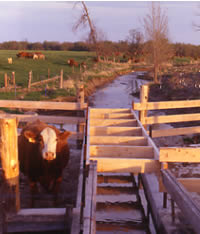 The new drinking system in 1988. Note the recently planted trees. (top right) |
||
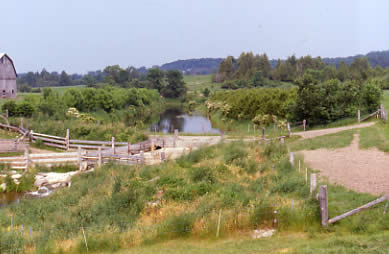 The reservoir in 2003. Many new wild guests take advantage of the abundant shelter and food offered by the many trees planted along its edge. |
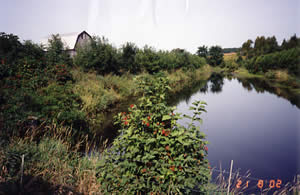
20 years later, over ten thousand trees have been planted along the creek's edge. The fence has been moved back even more to allow for extensive bird and wildlife habitat. This once barren area is now teeming with birds including hungarian pheasants, hawks, ducks, geese, and Great Blue Herons. Fish and frogs are everywhere along the waterway. The ecosystem can develop in peace, as no cattle ever directly access the creek. |
|||
|
|
|||
|
 |
|||
 |
 |
|||
|
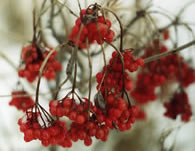
Cranberries provide valuable food for birds.
|
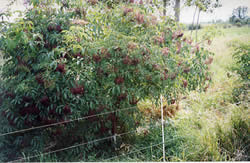
Elderberries are another choice
crop for wildlife |
|||
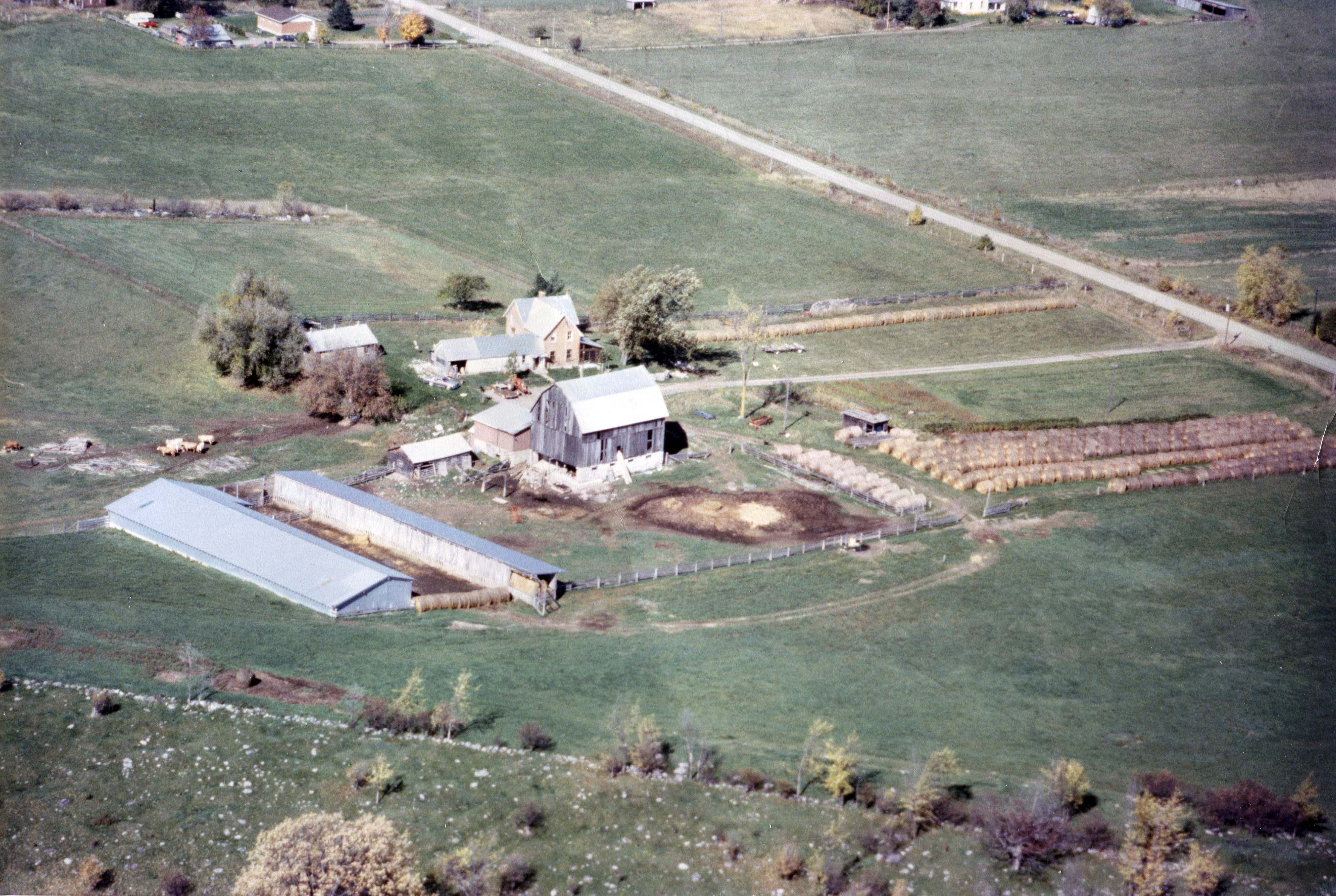
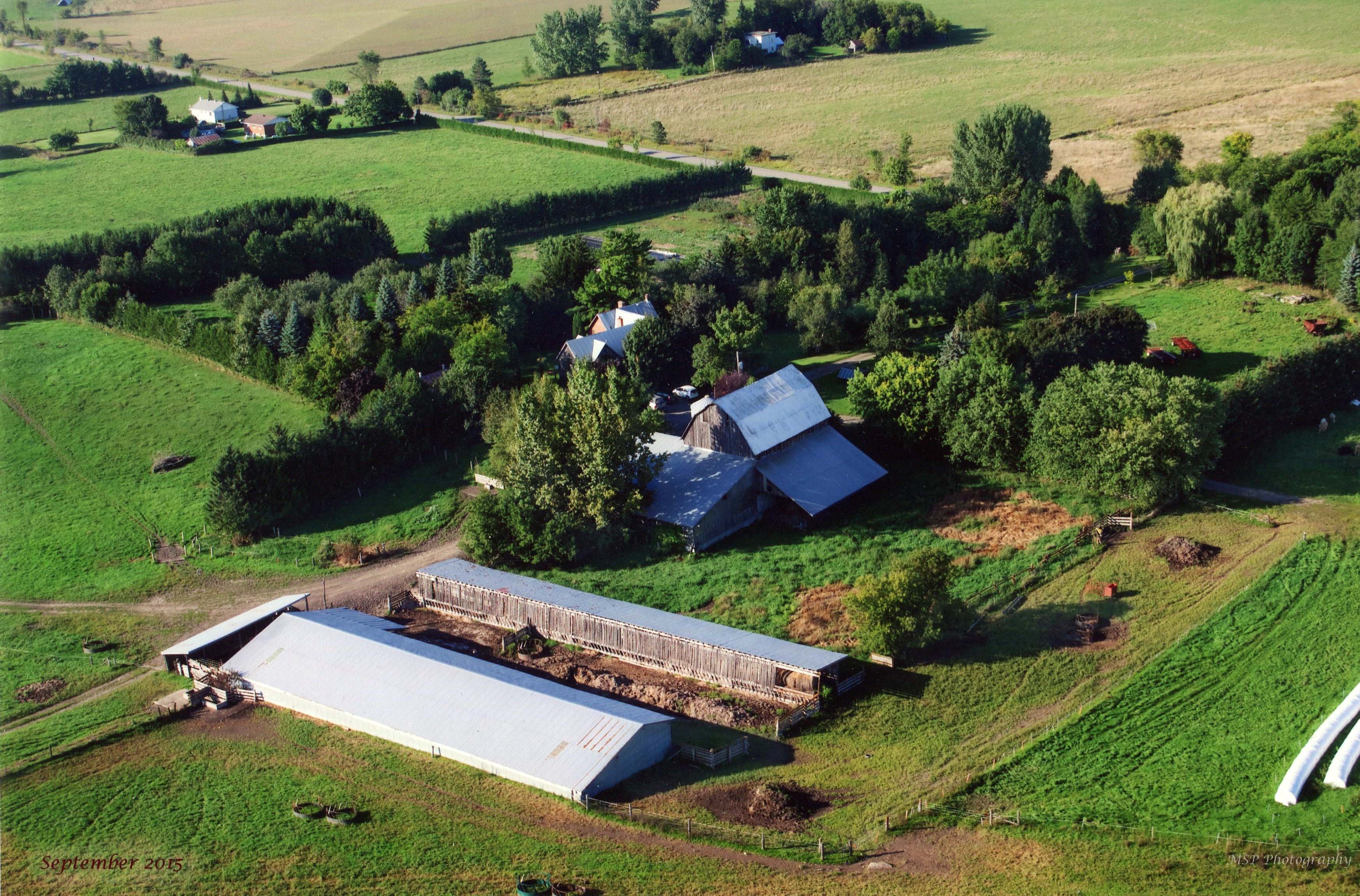
Two aerial views of the Dobson Farm - the one on the left was taken in 1982 and the one on the right in 2015. The improvement of the terrain with new shelter belts of trees and more than a generation of soil enhancement is clearly visible.
Further Discussion
A holistic approach to land management is fast gaining ground. The organization, Holistic Management International, believes in a planning system which addresses environmental, economic and social issues that farmers and ranches face today. We are a member of this group. Learn more!